My photo
Contact me at behindthefootlights@outlook.com

25 October 2012

HORRIBLE HISTORIES : TERRIBLE TUDORS

 
Terrible Tudors
Civic Theatre, Chelmsford
Thursday 25th October 2012
 
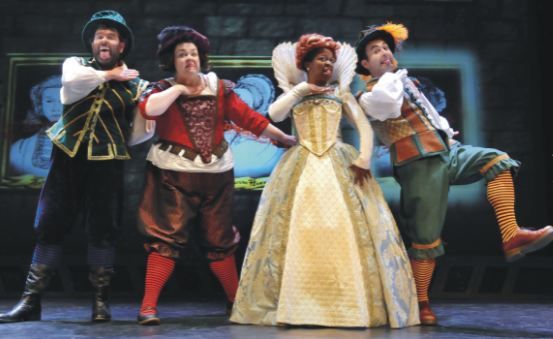
The Horrible Histories franchise is hugely popular in all it's various media.  Originating from an ever-growing series of books by Terry Deary, first published when I was in the age range of the target audience, there is now also a BAFTA winning TV series and this slick live stage version too.
 
The Tudor period is rich in all things horrible for the team to whip the children up with, starting from the fall of Richard III right through to the coronation of James I.  Packed full of facts, the children learn without even realising as they are entertained by the energetic foursome.  Fast-paced and dynamic, the performers are in complete control throughout, encouraging the children to shout and join in when required but also able to quell the frenzied excitement when the show needed to move on. 
 
Act 2 integrated fantastic 3D "Bogglevision" into the action.  Excellently designed, the scenes had the children squealing as items seemed to fly straight at them out of the screens.  A great way to immediately regain the energy built up before the interval.
 
Polished and professional this is a great introduction for children to both the designated period of history as well as to the thrills and spills of live theatre.  Superb.


23 October 2012

FAGIN'S LAST HOUR

 
Fagin's Last Hour
Cramphorn Theatre, Chelmsford
Tuesday 23rd October 2012
 
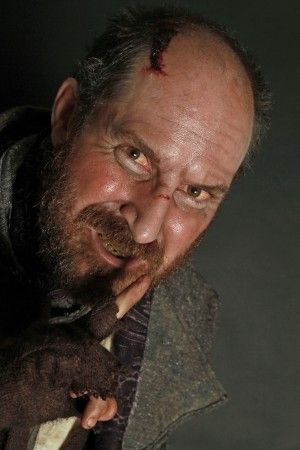
As the audience enters we are met with a wretched figure asleep on the stage.  In the small square lined with piles of straw and furnished with a single wooden stool, the oppressive ambience generated before the performance begins draws us into the cell in which Fagin is being held.
 
Woken by the chime of the church clock, we learn that Fagin awaits the arrival of the justice bestowed upon him for his life of crime.  The hangman is due in an hour, and the terrified villain of Charles Dicken's Oliver Twist proceeds to take us through the story of his arrival in the prison cell.  The familiar tale unfolds through the eyes of "the Jew", from the arrival of young Oliver Twist, his adoption by Mr Brownlow, kidnapping and subsequent return by Nancy and brutally Bill Sykes' ultimate revenge for her betrayal. 
 
In this one-man show, Fagin is brought vividly and chillingly to life by James Hyland.  His costuming and make-up are pitched perfectly, depicting the social standing of this shady character with faultless attention to detail.  Through immaculately stylised movements, Hyland morphs into the other characters in the story, and with nothing but his masterful physicality and excellent vocal flexibility each of the roles takes individual shape in the enrapt minds of the audience.  Captivating to the point of inducing complete silence throughout the auditorium, Hyland is an exquisitely skilful storyteller.
 
The stage was lit simply, with dingy enough white spots to produce the unnerving ambience but also light enough to pick out the detail in facial expressions.  Most effective however was the fading up to total red floods during the ferocious murder of Nancy, and again at Fagin's own death.  Coupled with the simple but effective stage design, each production element complimented the performance entirely.
 
The Cramphorn Theatre lends itself to this style of production, and the flexible space could have easily allowed for even more intimacy to be evoked through laying out the studio in the round.  Truly engaged as the audience so utterly were however, there is nothing to fault in this immaculate production.  After the excellent A Christmas Carol - As told by Jacob Marley (Deceased) last Christmas, and Fagin's Last Hour this autumn, I very much hope another popular tale is in line for a Brother Wolf adaptation next year.
 

19 October 2012

THE DROWSY CHAPERONE


The Drowsy Chaperone
Friday 19th October 2012


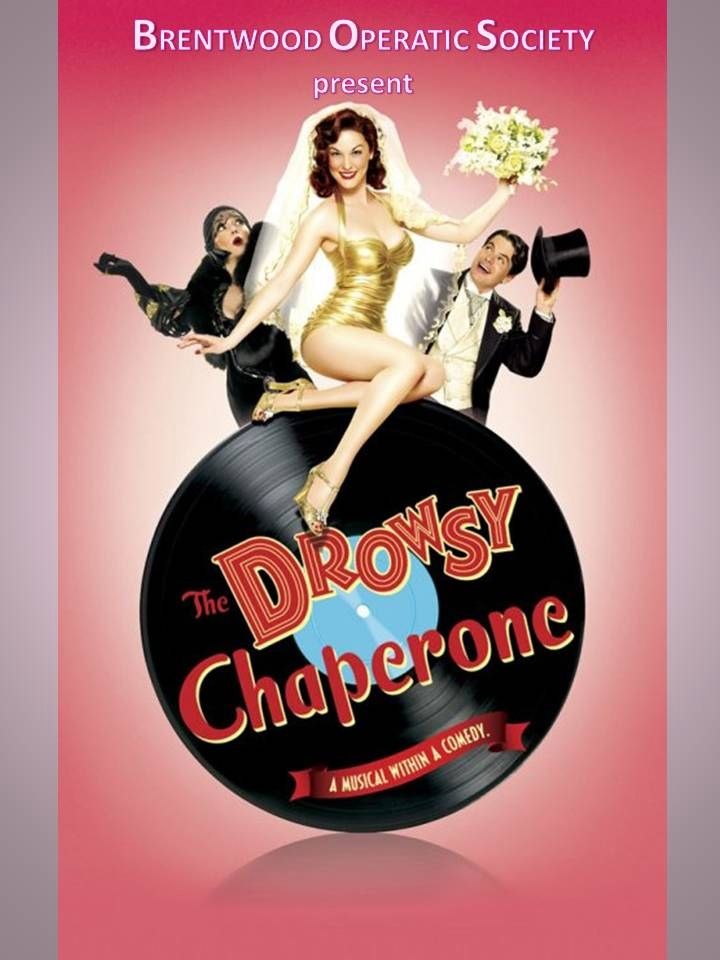
A show within a show, we open with the unnamed Man in Chair inviting us to join in listening to the soundtrack of his favourite musical comedy The Drowsy Chaperone to stop him feeling blue.  Witty, astute and passionate, he proceeds to guide us through the soundtrack, which we see come sparkling to life in the middle of his cosy apartment as though peering through a window into his imagination.  The success of the entire premise of this show hinges on just the right actor in this pivotal central role, and Ian Southgate could not have been a better choice.  His performance was charming and absorbing, his accent flawless, and he seemed to genuinely thrill in the revelation of the musical's scenes as if the part were written for him. 

It was easy for the audience to be swept along with Man in Chair's enthusiasm as each of the scenes he narrates, and performers he describes, were so wonderfully realised by a very talented ensemble without a single weak voice between them.  A simple story, lovingly parodying the plot lines of many 1920s musical comedies, The Drowsy Chaperone follows the story of a pair of young lovers on their wedding day. 

Young bride Janet Van De Graff, played by the beautiful Juliet Thomas, was a resplendent leading lady.  With a performance style like a Disney Princess, a delightful singing voice and wearing some wonderful period dresses - a perfect style for her slender frame - she fitted the role superbly.  Her betrothed Robert Martin was confidently played by Samuel Cousins.  Suave and elegant, his blindfolded scene on roller skates contained a courageous amount of movement considering the studio theatre setting, and he maintained a debonair poise throughout.  The title role was performed by Nina Jarram, a wonderful drunk she stumbled gloriously through every scene and reacted with fantastically lusty enthusiasm when seduced by the hilarious Aldolpho, played with a straight-faced twinkle in his eye by Martin Harris. 

Director and choreographer Jacob Allan has done an excellent job of bringing this enchanting musical to life, with the flexible space at the Brentwood Theatre thoughtfully designed to allow for the necessary roomy dance floor, but also create the intimacy of the Man in Chair's apartment.  An impressive debut. 

A wonderful choice of production by BOS, executed with skill, enthusiasm and professionalism, enthusiastically enjoyed by the sell-out Friday night audience.  So bought in was I by the curtain that there was almost had a tear in my eye and a lump in my throat as Man in Chair was joyously absorbed into the musical he loved. 

17 October 2012

MATILDA THE MUSICAL


Matilda the Musical
Cambridge Theatre, London
Wednesday 17th October 2012


This was my second visit to Matilda and almost a year into the West End there have been some cast changes, most notably the role of Miss Trunchbull - so effortlessly originated by Bertie Carvel - which has been taken over by a consummate David Leonard.  Menacing and more than slightly mad, "The Smell of Rebellion" is hilarious and masterfully choreographed - one of many highlights.  Mr Wormwood is new too, with Steve Furst stepping into Paul Kaye's loud suit and green wig.  Paul Kaye embodied Matilda's vile father, creating a fantastic comic character, easy to both love and hate.  Steve Furst did a good job too, although his annunciation wasn't as clear or as funny in the fabulous Act 2 opener, "Telly". 

The set is ingenious, designed by Rob Howell, with seamlessly integrated sections of staging popping up and down, corridors and rooms distinguished entirely through clear and simple lighting, and a beautiful section on large swings for the "When I Grow Up" number.  Costumes are varied, bright and suit each of the characters perfectly. 

It is, however, the supremely talented young actresses playing the title role that raise this production from simply a children's show into one of the most sought after tickets in town.  Lara Wollington starred in this performance, and after seeing Cleo Demetriou last year it is clear that the standard of young ladies is remaining consistently high.  Intelligent, mature, energetic and completely professional, Lara was a joy to behold.


This wonderful, multi-award winning, show has stood to strengthen Tim Minchin's current billing as the man of the moment.  His first full length musical as composer and lyricist, it triumphs in every way and has earned him just respect from critics, audiences and contemporaries alike.  Currently the best show in town, Matilda the Musical shouldn't be missed!


16 October 2012

SOAP OPERA

 
Soap Opera
MBP Theatrical, National Tour
Tuesday 16th October 2012
 
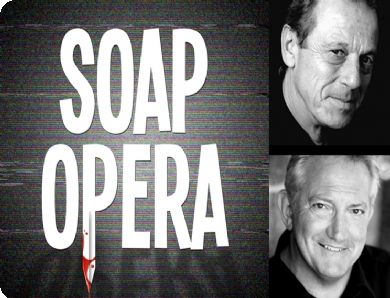
Ratings are dwindling for long-running soap Hollyenders Street when a new Executive Producer arrives to shake things up.  Her big new idea is to axe one of the main characters in a live "whodunnit" episode to mark the show's twentieth anniversary.  Fearing for their livelihoods, the cast begin to take inspiration from their on-screen story lines and plot their own sinister plans against the new boss.
 
The initial premise of the play is as a parody of that much loved British institution, the Soap Opera.  With a cast constituting a vast array of soap star legends, Leslie Grantham (Eastenders), Graham Cole (The Bill), Louis Emerick (Brookside) and Michelle Gayle (Eastenders), there should be much to be enjoyed by the soap loving target audience.
 
Set up as a studio based murder mystery to reflect the on-screen "whodunnit", the show opens with an all too lengthy episode of Hollyenders Street played out via the large television screens fixed around the stage, setting the pace for a snail-like first act.  Plagued with repetition, the simple plot and familiar characters are tiresomely introduced, back-stories explained, new characters brought in, relationships set up and we wander towards the interval with little sign of any murderous intrigue.  These are caricatures, mocking exaggerations of their famous soap alter-egos, and the protracted fleshing out of these two dimensional characters is painful, entirely unnecessary, and poorly executed.
 
At the very end of the first act the blows are finally struck, and not only does everyone have a motive but they all have a go at the crime, opening Act 2 with a cast full of guilt-ridden actors and a missing Producer.  It is at this point, with the entrance of the excellent Robert Pearce as life-long Hollyenders Street super-fan, Detective Bill Emmerside, that the pace finally picks up and the play starts to take off, even wringing out some laughter in places - notably missing during the first half. 
 
As the audience saw the set up and execution of all the murder attempts however there is little to keep them guessing, and the final twist - predictable even by soap standards - needs more conviction to illicit any dramatic impact. 
 
A disappointing production, with writing that could not be saved by the well designed sets or excellently filmed excerpts from the fictional TV programme.  Soap fans should still enjoy seeing these much loved actors sending themselves up on stage, but they need to do a much better job to pull off this play. 


15 October 2012

TIMON OF ATHENS

 
Timon of Athens
Olivier Theatre, London
Monday 15th October 2012
 
Timon of Athens is one of Shakespeare's least performed works, argued as perhaps experimental, perhaps unfinished, it is certainly not structured quite as one might expect from the usually formulaic Bard, but is inarguably tragic in it's own way.
 
Timon is a wealthy and overtly generous Athenian gentleman who takes pleasure in lavishing his large group of friends with expensive gifts.  Before long however, the frivolous spending catches up with him, and he is forced to turn to his wealthy friends to repay some of the kindesses he has shown them; to save him from his debtors by lending him large sums of money.  One by one his friends all refuse and, in a dramatic fall from grace that poignantly reflects the instability of our modern financial system, Timon is left backrupt.  After holding a final revengeful "banquet" he flees to the streets.  Bitter and twisted, he discovers a trove of buried treasure, but spends it on funding a rebellion in the city he now hates. 
 
The typically grand scale National Theatre set opens on Timon's stately home, with an enormous painting and long banquetting table, suggestive of the grandeur of his peerage.  In Act 2, the desolation expressed in the text is reflected in the waste lands through which a tramp-like Timon lumbers.  Dank and strewn with litter, the contrast in the character's life is all too apparent. 
 
The ensemble cast, directed by Nicholas Hynter, is of an expected high standard and there are some wonderful stand-outs in Hilton McRae's morose Apemantus and Tom Robinson's "Made in Chelsea" style Ventidius.  The play is very much centred around the title character however, and Simon Russell Beale is engrossing in his depiction of the duality of Timon's fate.  The uncontested highlights of the evening are the periods where Beale holds the stage alone, clear, intelligent and entirely captiviating, he is a joy to behold.
 

13 October 2012

42ND STREET

 
42nd Street
UK Productions National Tour
Saturday 13th October 2012
 
 
It's glitz, glamour and tap-shoes galore as the Theatre Royal is transformed this week into New York's 42nd Street.  A show-within-a-show, we follow the development of Pretty Lady, a new musical written to save the financial fate of the production team following the Wall Street crash. 
 
Fresh faced young Peggy Sawyer is played by Jessica Punch, with wide eyed innocence almost bordering on gormlessness at times, but a lovely voice and some exceptional tapping.  Thrown in at the deep end, she carries Pretty Lady's Broadway opening, and leads the audience along with her all the way.  Pretty Lady's Director Julian Marsh is played by Dave Willetts.  Masterful in his drilling of the ensemble, confident but modest in success, his professionalism and passion is absorbing.  Once a star but still a diva, Dorothy Brock is played by Marti Webb, her warm, powerful voice bringing the house down.
 
Lavish sets, dozens of changes between both sumptuous and skimpy costumes, familiar upbeat tunes and oodles of feel-good factor make for a traditional musical theatre treat - and a very enjoyable one at that.

12 October 2012

THEY CAME TO A CITY

 
They Came to a City
Christ Church, Chelmsford
Friday 12th October 2012
 
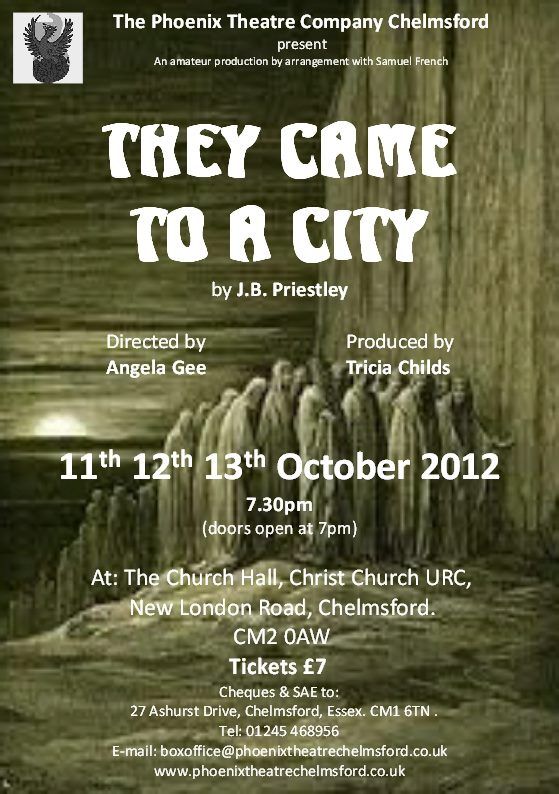
Written among a gloomy wartime Britain, Priestley's characters in They Came to a City represent a cross-section of 1940s society.  Thrown together - we never learn how - outside the walls of a socialist paradise, a city where Capitalism is recognised as a crime and a description of our financial system is met with disbelieving hilarity, the play centres around their individual reactions to the anticipation and then realisation of what the city has to offer. 
 
The action never takes us inside the city, but the surrounding walls and imposing door that we do see were well made and sturdy.  A step up to the wall and some simple boxes offered enough variety of levels to create some interest.  Christ Church is a large space to fill, with the stage and audience distant enough to cause some problems with less projected voices, and a few quieter moments did become slightly lost.  That said, the stage was used well, with no distracting blocking.  Costumes were generally well chosen and helped portray the differentiation of the classes.
 
With a static and action less plot, the piece relies on the characterisation and portrayal of each individual and the way they interact as an ensemble, which director Angela Gee generally achieved from her cast.  The pompous Lady Loxfield was played by Sharon Goodwin, with a lovely accent and sincere indignance at her daughter's betrayal, before revealing the truth of her self centred nature with an immediate switch of mood.  Her optimistic daughter Phillipa was portrayed by real life daughter Shelley Goodwin, in a confident performance of upper class rebellion.  Shelley needed a straighter posture, as befits Phillipa's social standing, but her speeches were delivered with feeling and maturity.  Geoff Hadley gave an assertive performance as self-made businessman Cudworth, with Chris Wright more cautious but fittingly eccentric as the bumbling Sir George Gedney, both unlikely ever to buy into the offerings of the brave new world on offer through the city door.  Helen Langley hobbled convincingly as Mrs Batley, the lovable old char with nothing to lose.  Syd Smith and Tricia Childs as the Strittons showed the reality of their stale but comfortable marriage, their contrasting views almost stretching the relationship to breaking point, with the audience left to decide if it is love or simply habit that draws them back together.  Some decide to stay, some decide to return home, but only worldly wise engineer Joe spots the potential for an evangelical growth of the paradise he sees within the city walls, convincing new love Alice along with him.  Seasoned barmaid Alice had certainly been around, but Jean Speller's interpretation offered just enough innocent hope to make a believable plot in her open heart and willingness to follow Joe.  It was unclear what accent Andy Millward as Joe was trying to achieve, but it was unfortunately quite distracting making his character somewhat less convincing.  However his performance was composed and thoughtful, with a revolutionary passion in his final speech.
 
Preistley's play feels almost comically optimistic to a 2012 audience, although it's subversive content would have been radically progressive on its wartime opening.  There are undoubtedly questions raised that still provoke thought and conversation, and on the whole the ensemble achieved the difficult task of retaining the necessary period of the piece while also engaging a modern audience.  This was a courageous choice for Phoenix to take on, but was well worth the risk as it resulted in just about the best show I have seen them produce. Congratulations to all.


10 October 2012

SHERLOCK HOLMES - A STUDY IN FEAR

 
Sherlock Holmes - A Study in Fear
Civic Theatre, Chelmsford
Wednesday 10th October 2012
 
It seems that Arthur Conan Doyle's version of his iconic character's struggle with arch nemesis Professor Moriarty in The Final Problem does not go quite far enough for the Rumpus Theatre Company.  They have chosen to embellish the story with an interwoven plot from Robert Louis Stevenson's Jekyll & Hyde, in a surreal twist to the already suspenseful detective adventure.  Not necessarily a Sherlock purist, I understand the need to extend the content of the short stories to make them fit a full length play, but this is an unimaginative merging of two contemporary stories that do not sit naturally together.
 
A bare walled set with a desk and just a few chairs represent the various locations and modes of transport required, which should have made for slightly faster, smoother scene changes in Act 1, but did help to maintain the pace in Act 2.  Aside from some curiously shaped fixed spots, there were some effective lighting designs and sound effects, which helped evoke moods and flesh out locations.  I especially liked the moving lights in the windows of the excellent sounding trains, and the whole look of the scene at the Reichenbach Falls. 
 
Performed with gusto, a three man team perform all of the characters involved.  Nicholas Briggs plays the deducing Sherlock with energy and an assured confidence that suits the character well.  Straight, assertive and full of intent, his Sherlock carries the story with dexterity and he performs the bizarre additional denouement with skill.  His best friend and sidekick, played by Ian Sharrock, is characterised as an altogether too bumbling Watson for my taste.  A military army doctor, the character deserves to be intelligent and courageous in his own way, challenged by Holmes' superior intellect but not baffled by it.  Sharrock was undoubtedly entertaining in his portrayal, eliciting the majority of the evening's laughter, but there is plenty of humour in the content of Arthur Conan Doyle's original work so as not to require the dumbing down of Watson. 
 
An evening that generally made up in execution what it lacked in writing and direction.  Perhaps a previous story conveying the menace of Moriarty should precede an attempt at The Final Problem, to help build the audience's suspense at the horror of his deeds.  An entertaining interpretation of Sherlock himself however, interestingly staged.


TWELFTH NIGHT

 
Twelfth Night
Globe Theatre, London
Wednesday 10th October 2012
 
Twelfth Night has everything one expects and could want from a Shakespearean comedy; cross-dressing, a couple of drunks, a witty fool, some farcical confusion; and this Globe production tops all that off with a couple of 'National treasure' cherries on top too. 
 
Firstly, theatrical institution Mark Rylance once again proves his value as one of the very best stage actors in the business.  Reprising his role as the Countess Olivia in this all-male production, for which he received an Olivier award nomination in 2002, Rylance commands attention from the moment of his first entrance. Gliding as though on casters, even his movement around the stage is full of comedy value. What Rylance's performance achieves above the rest of the exemplary cast is the intricate detail in his characterisation.  Every giggle, blush, flutter of the eyelashes and position of the hand is carefully and expertly considered, and yet delivered entirely naturally.  His masculinity melts away into the embodiment of the Countess herself, and the result is a hilariously flirtatious aristocrat with a teenage-style crush on her wooer.  A magnificent performance I could watch again and again.
 
If that wasn't enough, Twitter grand master and Quite Interesting patriarch Stephen Fry takes on the mournful Malvolio. A straight-faced bully of a manservant, Malvolio receives his arguably excessive comeuppance in the form of a silly prank that is taken too far, which is where the character truly comes into his own. Fry is hilarious in the iconic letter scene, and has the audience entirely on side as he protests the injustice he has suffered in the final denouement. A welcome return to the stage for the nation's favourite brainbox.
 
Performances across the entire ensemble do not disappoint, with Paul Chahidi's busty Maria joyously revengeful and subtly seductive against Colin Hurley's constantly drunken Sir Toby Belch.  Roger Lloyd Pack triumphs as the bumblingly naive Sir Andrew Aguecheek.  Johnny Flynn gives an earnest interpretation as the source of the confusion, Viola disguised as Cesario, with some hilariously deadpan expressions in various love scenes with both the excitable Olivia and baffled Duke Orsino, who is assertively portrayed by Liam Brennan.  Viola's uncannily alike brother Sebastian, played by a consummate Samuel Barnett, joins in the commotion in time for the happy ending.
 
Continuing the Globe's theme of "original practises" costumes are sumptuously traditional, with programme credits to a team of three for Hats alone, as well as one with the sole responsibility for Stockings.  The set is traditionally bare, with the set piece brought on for the box hedge making wonderful use of Roger Lloyd Pack's height. 
 
A high profile cast has generated a buzz around this production even among those who may not have otherwise frequented the Globe - which can only be a good thing - and has sparked the unusual move of a limited West End transfer for Twelfth Night alongside it's sister show Richard III, also starring Rylance.  The near sell-out audiences at the Apollo are in for a treat.